
Churches

Historic churches

General view of Holy Etchmiadzin Cathedral Old photograph of Holy Etchmiadzin Cathedral

Holy Etchmiadzin Cathedral

📍 1 Araratyan St, Vagharshapat 1101 🗺️ Open in Maps

Foundation (4th century)

Holy Etchmiadzin Cathedral took shape in the 4th century, when Armenia was one of the first countries to adopt Christianity as a state religion.

According to tradition, Saint Gregory the Illuminator had a vision in which Christ descended from heaven and struck the ground with a golden hammer, showing the place where the cathedral should be built.

The name “Etchmiadzin” literally means “the Only‑Begotten descended”.

Rebuilding and strengthening

Between the 5th and 7th centuries the cathedral was rebuilt and reinforced several times, and under Catholicos Komitas A Aghtsetsi it received the cruciform domed layout that has survived to this day.

From the Middle Ages to the modern era

In the 17th century a belfry and other monastic buildings were added, and in the 19th century new educational and cultural institutions were built around the complex, turning Etchmiadzin into a major spiritual and cultural center for Armenians.

Recent period

Since 2000, Holy Etchmiadzin Cathedral and the nearby churches have been inscribed on the UNESCO World Heritage List, and the cathedral remains the seat of the Catholicos of All Armenians and the main shrine of the Armenian Apostolic Church.

Did you know?

  • Etchmiadzin is considered one of the oldest cathedrals in continuous use in the Christian world.
  • The cathedral treasures a number of important Christian relics and liturgical objects.
  • For centuries it has been a key symbol of Armenian identity, faith and statehood.

Etchmiadzin is not just an ancient monument, but a living place where faith, history and the present meet.

Excavation area of the octagonal church in ancient Artashat Plan of the ancient octagonal church in Artashat

Octagonal Church of Artashat

📍 Artashat, Ararat Province 🗺️ Open in Maps

Location and discovery

The remains of the octagonal church were discovered at ancient Artashat–Artaxata, which served as one of Armenia’s capitals in the Hellenistic and early Christian periods. The church stood on a hillside and occupied about 1000 square meters.

Dating and significance

Radiocarbon analysis of wooden fragments shows that the church was built in the first half of the 4th century, making it one of the earliest archaeologically documented churches in Armenia.

The octagonal plan with cross‑shaped extensions is typical of early Christian memorial or martyr churches, so it is assumed that the building may have marked the grave of a martyr.

Architectural features

The octagonal core has a diameter of about 30 meters and was built of local stone and lime mortar, with a simple floor and terracotta tiles inside.

Trace of early Christianity in Armenia

The octagonal church of Artashat is an important proof that Christian worship was firmly established here already in the early 4th century and shows architectural links between Armenia and the eastern Mediterranean world.

Old view of Saint Hripsime Church Modern view of Saint Hripsime Church

Saint Hripsime Church

📍 85 Mesrop Mashtots St, Vagharshapat 🗺️ Open in Maps

Location and foundation

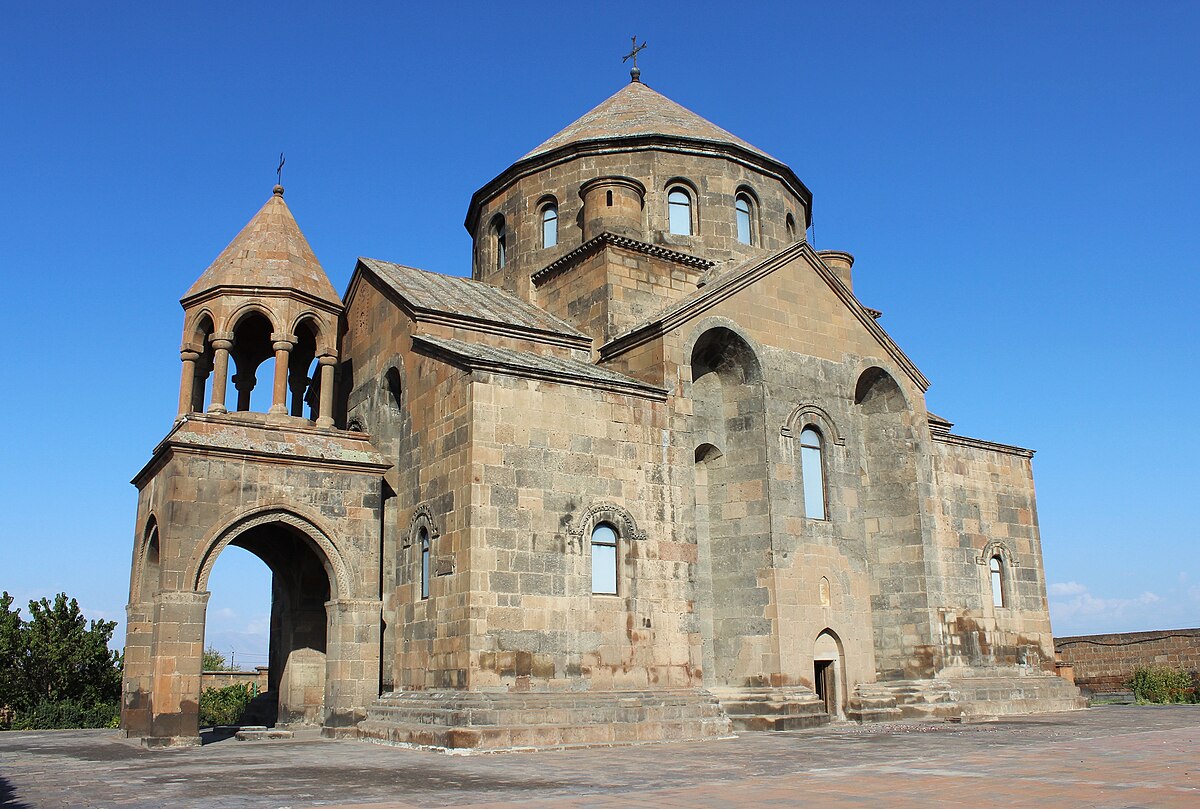
Saint Hripsime Church stands in Vagharshapat near the spiritual center of Etchmiadzin, on the site where, according to tradition, the martyr virgin Hripsime is buried.

Construction (618)

The present stone church was built in 618 under Catholicos Komitas A Aghtsetsi and is one of the classic examples of early medieval Armenian domed centralized churches.

Architecture

Its cruciform domed plan and clear volumes strongly influenced later Armenian church architecture.

Heritage

Saint Hripsime is part of the UNESCO World Heritage listing “Cathedral and Churches of Etchmiadzin and the Archaeological Site of Zvartnots”.

Old view of Saint Gayane Church Modern view of Saint Gayane Church

Saint Gayane Church

📍 Vagharshapat 🗺️ Open in Maps

Location and martyrdom

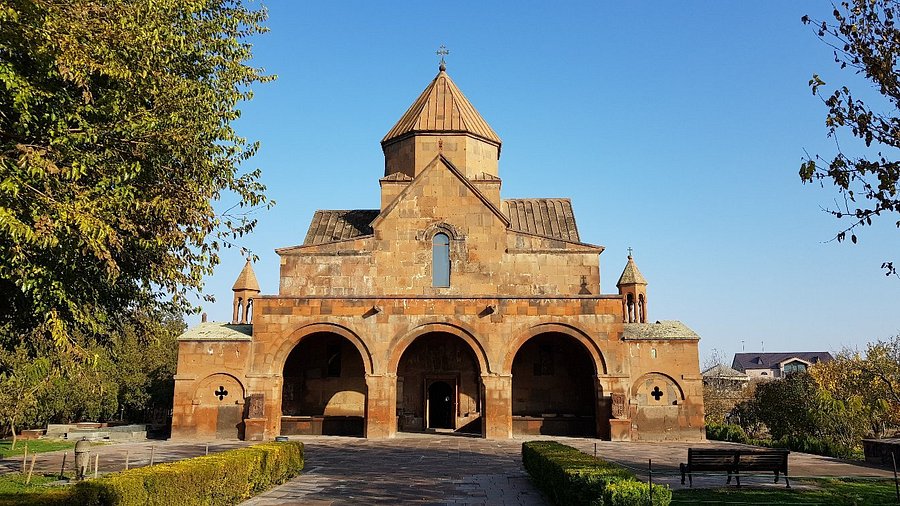
Saint Gayane stands in Vagharshapat just south of Holy Etchmiadzin, on the site where, according to tradition, Abbess Gayane was martyred together with Hripsime and the other virgins.

Construction (630)

The present church was built in 630 under Catholicos Ezra on the site of a smaller memorial chapel and has largely preserved its original form.

Architecture

It is a three‑aisled domed basilica with four interior pillars and is considered one of the best 7th‑century examples of this type.

Heritage

Saint Gayane is also part of the UNESCO World Heritage complex “Cathedral and Churches of Etchmiadzin and the Archaeological Site of Zvartnots”.

Old photograph of Khor Virap Monastery Khor Virap Monastery today, with Mount Ararat in the background

Khor Virap Monastery

📍 Pokr Vedi, Ararat Province 🗺️ Open in Maps

Early Christian tradition and a 17th‑century church

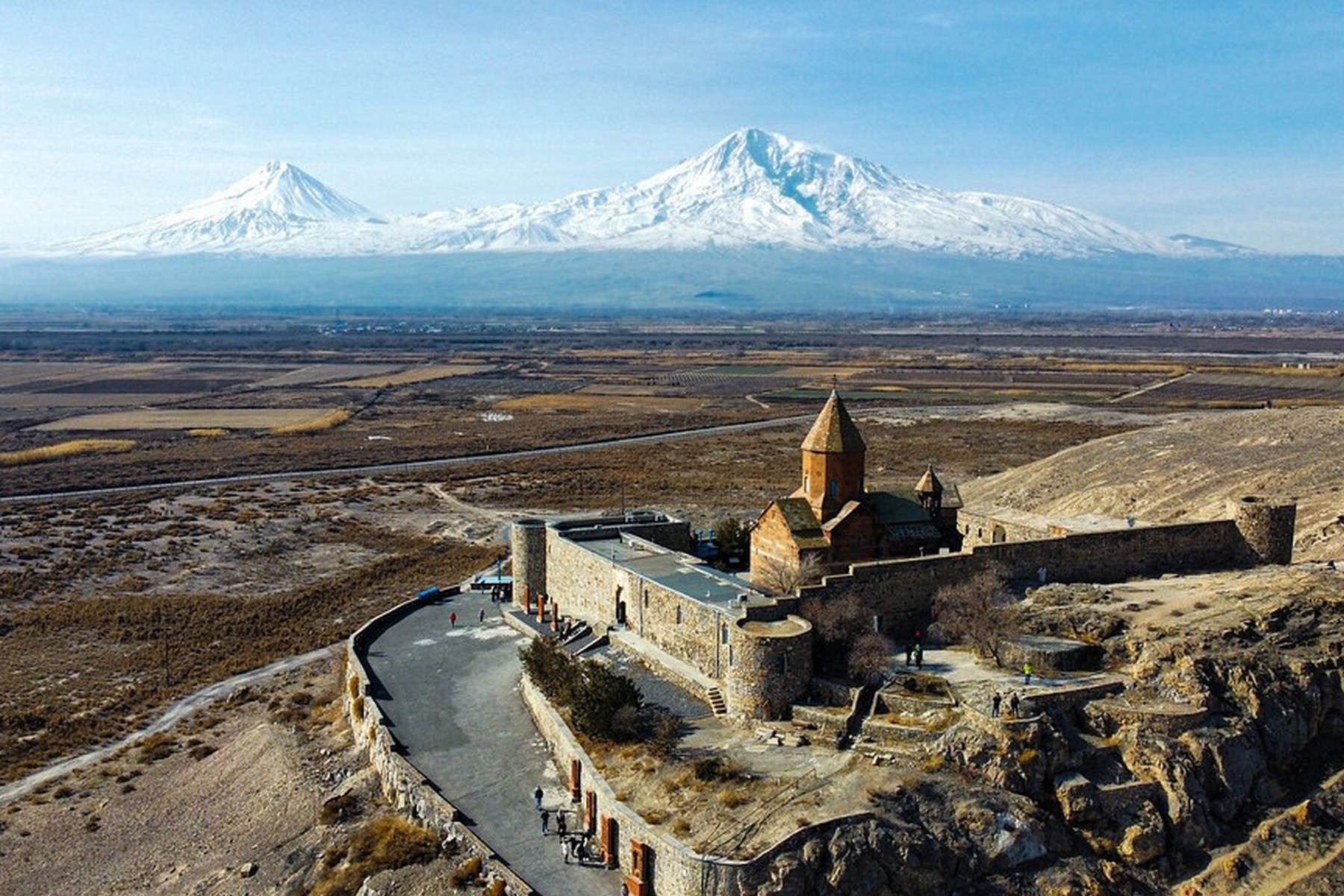
Khor Virap is located near ancient Artashat, at the foot of Mount Ararat, and is associated with the famous story of Saint Gregory the Illuminator, who, according to tradition, was imprisoned here in a deep pit for about thirteen years before King Tiridates III converted and Armenia became the first officially Christian state.

Sources mention a small Christian church here as early as the 4th–5th centuries, and in the 7th century a small chapel of Saint George was built on the site.

The present monastery complex was formed in the 17th century with the construction of the Surb Astvatsatsin Church, monastic cells and walls; today Khor Virap is one of Armenia’s most visited pilgrimage sites, famous for its classic view of Ararat.

Old photograph of Sevanavank Monastery on the island Sevanavank Monastery above Lake Sevan Sevanavank Monastery today on the Sevan peninsula

Sevanavank Monastery

📍 Sevan, Gegharkunik Province 🗺️ Open in Maps

Foundation and from island to peninsula

Sevanavank stands on a rocky height on the northwestern shore of Lake Sevan which, until the mid‑20th century, was a real island separated from the mainland by deep water. According to an inscription, the monastery was founded by Princess Mariam, daughter of King Ashot of the Bagratuni dynasty, who built the churches of the Holy Apostles and the Holy Mother of God.

Tradition holds that an earlier Christian chapel was built here already in the 4th century at the initiative of Saint Gregory the Illuminator, and in the 9th century the monastery became a fortress and learning center of the Syunik princes, with its own school and scriptorium.

In the Soviet period the water level of Lake Sevan was lowered and the island turned into a peninsula; today a short stairway leads up to the monastery with wide views over the lake. Sevanavank was restored mainly in the mid‑20th century and again became an active spiritual center in the 1990s.

Rock-cut khachkars inside the cave churches of Geghard Monastery Geghard Monastery under the cliffs of the Upper Azat Valley Rock-cut khachkars inside the cave of Geghard Monastery

Geghard Monastery

📍 Mets Gilanlar, Kotayk Province 🗺️ Open in Maps

A rock‑carved monastery and the legend of the Holy Lance

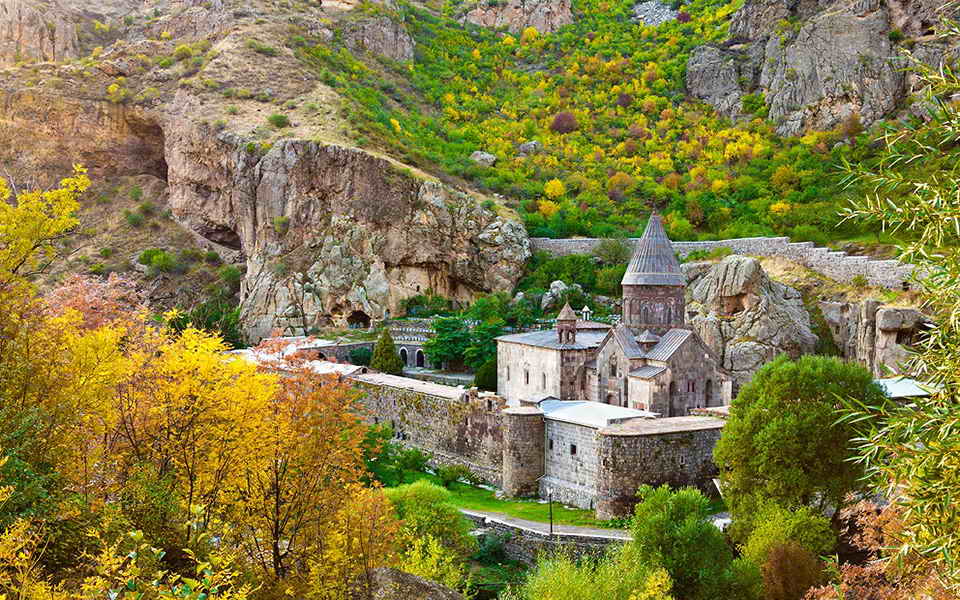
Geghard Monastery lies deep in the Upper Azat Valley, pressed against steep cliffs so that much of the complex seems to grow out of the rock itself. Its name comes from the “Holy Geghard”, the lance that, according to tradition, pierced Christ’s side and was once kept here.

Within the walls you find both free‑standing churches and fully rock‑cut chapels whose domes and vaults are carved directly into the mountain. In one of the cave halls, if you look up you see a round opening in the ceiling where a beam of light falls into the dark space like a spotlight.

History and dating

The earliest foundations at Geghard go back at least to the 4th century, while the main church of the Holy Mother of God dates from the 13th century, built under the Zakarian princes. At that time the site became a fortified monastery with walls, gates and inner courtyards.

Architecture and cave chambers

Geghard combines several worlds in one place: classical Armenian cross‑domed architecture, deep cave chapels with carved columns and walls covered in khachkars and inscriptions, and an open courtyard that suddenly reveals the dramatic canyon of the Azat River.

UNESCO site today

Geghard Monastery and the Upper Azat Valley are inscribed on the UNESCO World Heritage List as a unique blend of landscape and spiritual heritage. The monastery is still active, and the views from the surrounding slopes over the cliffs and the valley make it one of the most impressive stops in Armenia.

Older view of Noravank Monastery surrounded by red cliffs Noravank Monastery today, perched among the red rocks of the gorge Older view of Noravank Monastery surrounded by cliffs

Noravank Monastery

📍 Areni, Vayots Dzor Province 🗺️ Open in Maps

A monastery hidden in a red-rock gorge

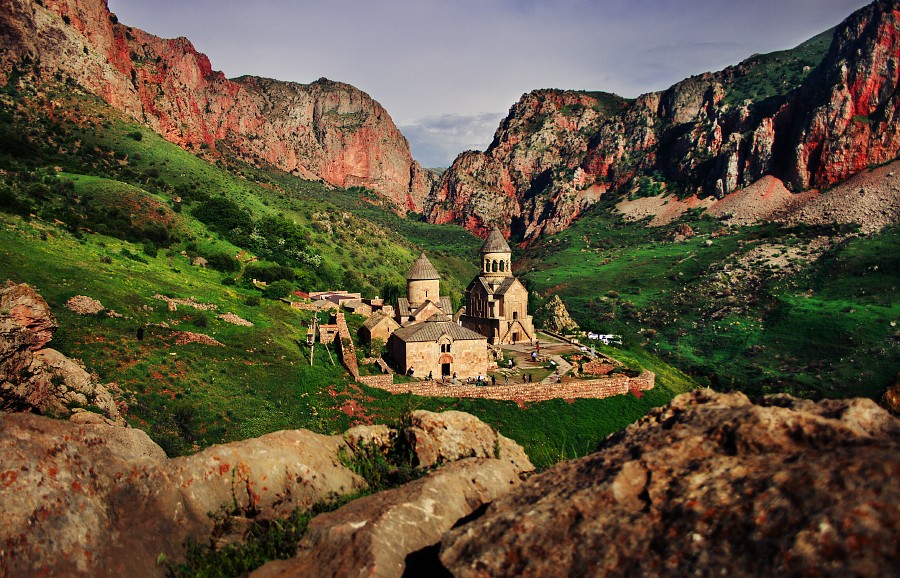
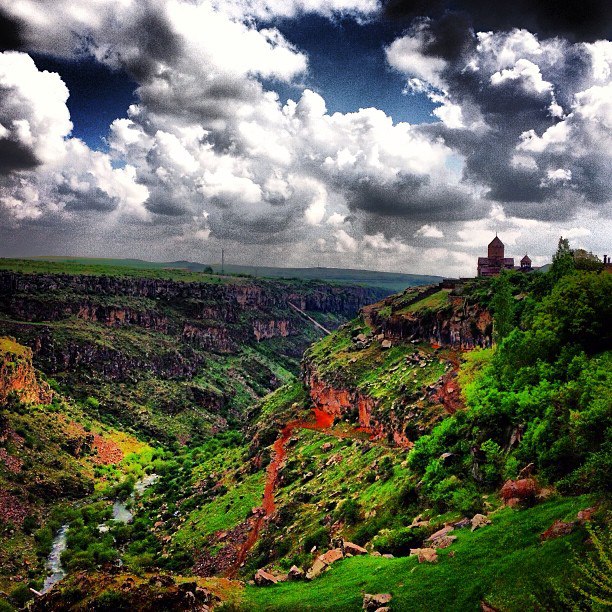
Noravank is tucked deep inside the Amaghu Gorge, hemmed in by steep red cliffs so that the monastery seems to be growing out of the rock itself. As you drive into the gorge the road narrows, and at the very end a small plateau opens up with the monastery complex.

The core of the complex dates from the 13th century, when the churches of Surb Karapet and the small two-storey Surb Astvatsatsin (Holy Mother of God) were built, along with chapels and halls linked to the Orbelian princely family.

Orbelian tombs and the two-storey church

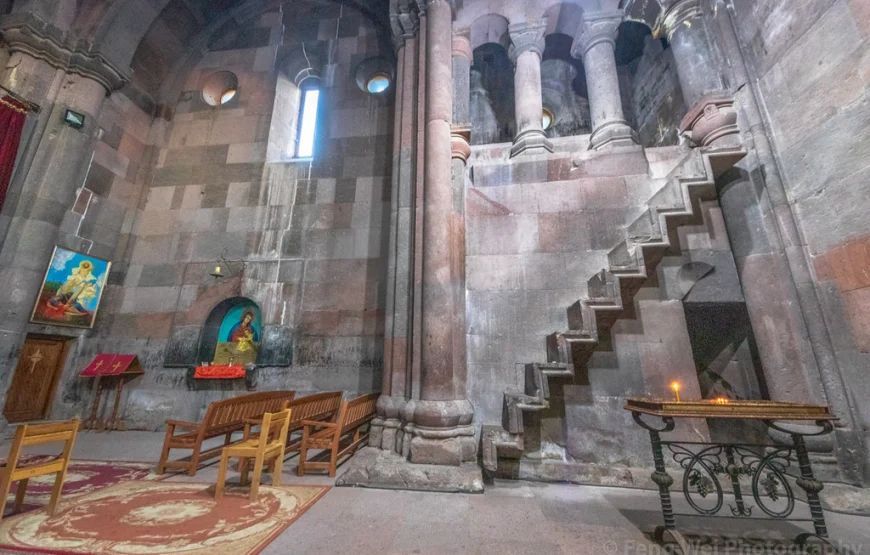
The compact Surb Astvatsatsin church, with a burial chamber on the lower level and a small sanctuary above, is one of Noravank’s most iconic buildings. The narrow external stairway leading to the upper floor is a favourite photo spot and a good example of how medieval Armenian architects played with form and symbolism.

Tombstones of the Orbelian princes, khachkars and long inscriptions on the walls show how Noravank functioned not only as a spiritual center but also as a regional political hub in southern Armenia.

Architecture and landscape

Almost completely surrounded by cliffs, Noravank changes character with the light: in the early morning it feels cool and quiet, while at sunset the red rocks glow and the whole complex turns golden.

Noravank today

Today Noravank is one of Armenia’s most visited monasteries; it is often combined with Garni and Geghard or with trips further south toward Syunik, making it a perfect stop between Yerevan and the southern regions.

Older view of Tatev Monastery standing on the edge of the gorge Tatev Monastery today above the Vorotan Gorge Carved doorway and stone walls of Tatev Monastery

Tatev Monastery

📍 Tatev 3218, Syunik Province 🗺️ Open in Maps

A cliff-edge monastery above the Vorotan Gorge

Tatev Monastery sits dramatically on the edge of the deep Vorotan Gorge, on a rocky plateau from which the cliffs drop almost vertically down into the valley. From above, the complex looks like a compact fortress guarding the surrounding landscape.

The main core of the monastery was formed in the 9th–10th centuries and includes the church of Saints Paul and Peter, the church of Saint Gregory, chapels, monastic cells and courtyards, all enclosed by defensive walls.

Medieval university and center of learning

In the 14th–15th centuries Tatev was famous for its university, one of the most important centers of scholarship and manuscript production in medieval Armenia. Scholars taught theology, philosophy, arts and sciences here, and many illuminated manuscripts were created in its scriptorium.

Walking around the complex today, you can still sense this academic past in the remains of the library, classrooms and residential cells around the main courtyard.

Architecture and the “swinging column”

Tatev is also known for its so‑called swinging or rocking column, a stone pillar that is sensitive to small movements and is thought to have served as an early warning device or simply as an ingenious architectural feature.

Wings of Tatev ropeway

Today many visitors reach Tatev via the “Wings of Tatev” aerial tramway, one of the world’s longest reversible cableways, which connects the village of Halidzor with the monastery across the gorge. The 12‑minute ride offers sweeping views of the cliffs and brings the monastery slowly closer from above.

Together, the medieval monastery, the dramatic gorge and the modern ropeway make Tatev one of the absolute highlights of southern Armenia.

Older view of Haghpat Monastery with stone roofs and crosses Haghpat Monastery today above the green slopes of the Debed Gorge General view of Haghpat Monastery with its courtyard and monastic buildings

Haghpat Monastery

📍 Haghpat, Lori Province 🗺️ Open in Maps

A Bagratid-era center of learning above the Debed Gorge

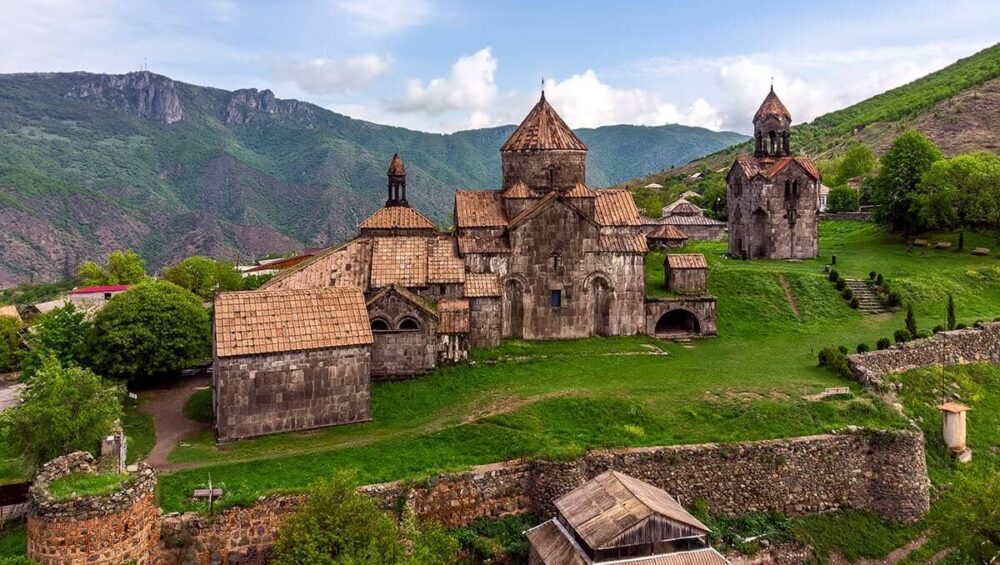
Haghpat Monastery stands on a plateau above the Debed Gorge in northern Armenia, surrounded by green hills and deep valleys. It was founded in the 10th century under the Bagratid kings and soon became one of medieval Armenia’s key spiritual and educational centers.

The main church, Surb Nshan (Holy Sign), was built between 976 and 991 on the order of Queen Khosrovanush, and in later centuries a large gavit, belfry, scriptorium and other monastic buildings were added around it.

Gavit, scriptorium and khachkars

Haghpat is famous for its spacious gavit, which served both as a gathering place and as a space for teaching; the monastery’s scriptorium was an important center for copying and illuminating manuscripts. Numerous khachkars and long inscriptions record the names of benefactors and monks over the centuries.

Moving through the passages and small courtyards, you feel that this was once an entire monastic “village” with living quarters, workrooms and study spaces, not just a single church.

UNESCO together with Sanahin

Haghpat and nearby Sanahin Monastery together form a single UNESCO World Heritage Site as outstanding examples of Bagratid-period Armenian architecture. The two complexes stand on opposite sides of the Debed Gorge and are usually visited on the same trip.

Haghpat today

Today Haghpat remains a functioning monastery, but it also feels like a quiet rural place with grass-covered roofs, stone paths and often a slightly misty sky. It captures the atmosphere of the Lori region in a very concentrated way.

Older view of Sanahin Monastery with stone roofs Sanahin Monastery today, surrounded by the mountains of Lori

Sanahin Monastery

📍 Alaverdi 1705, Lori Province 🗺️ Open in Maps

A medieval learning center hidden in the mountains of Lori

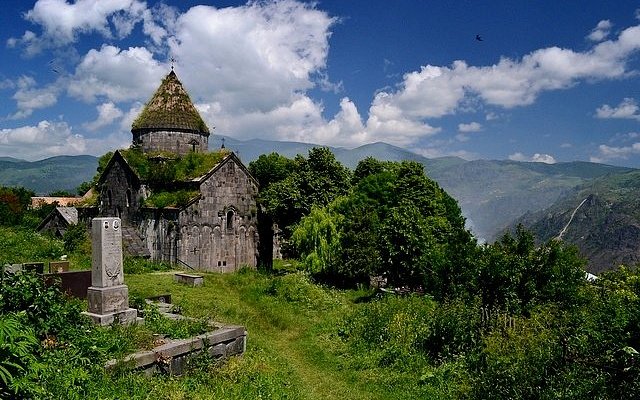
Sanahin Monastery stands on a high plateau above the Debed Gorge in northern Armenia, very close to Haghpat, and together they form a single UNESCO World Heritage Site. Founded in the 10th century, Sanahin became one of the key spiritual and educational centers of Bagratid Armenia.

At its core are the churches of the Holy Mother of God and the All-Saviour, around which gavits, chapels, a scriptorium, monastic cells and a belfry were added over the centuries.

Place of learning and manuscripts

In the Middle Ages Sanahin was home to a school and scriptorium where scholars worked on theology, philosophy and the sciences, and where many finely illuminated manuscripts were produced. The remains of study rooms and library spaces still hint at this intellectual life.

Walking through the courtyards you notice numerous khachkars, stone benches and old trees that contribute to the feeling of a living, open-air museum.

Architecture and atmosphere

Built mostly of dark basalt, the churches of Sanahin have strong, austere volumes that sit perfectly in the often misty, overcast landscape of the Lori highlands. Inside, the spaces are dim and the light enters through small windows and oculi in the domes, creating a very contemplative mood.

Part of a UNESCO pair

Together with nearby Haghpat, Sanahin is inscribed on the UNESCO World Heritage List as an outstanding example of medieval Armenian monastic architecture. Most visitors see both monasteries in a single trip, gaining a good sense of the monastic culture of the Debed Canyon.

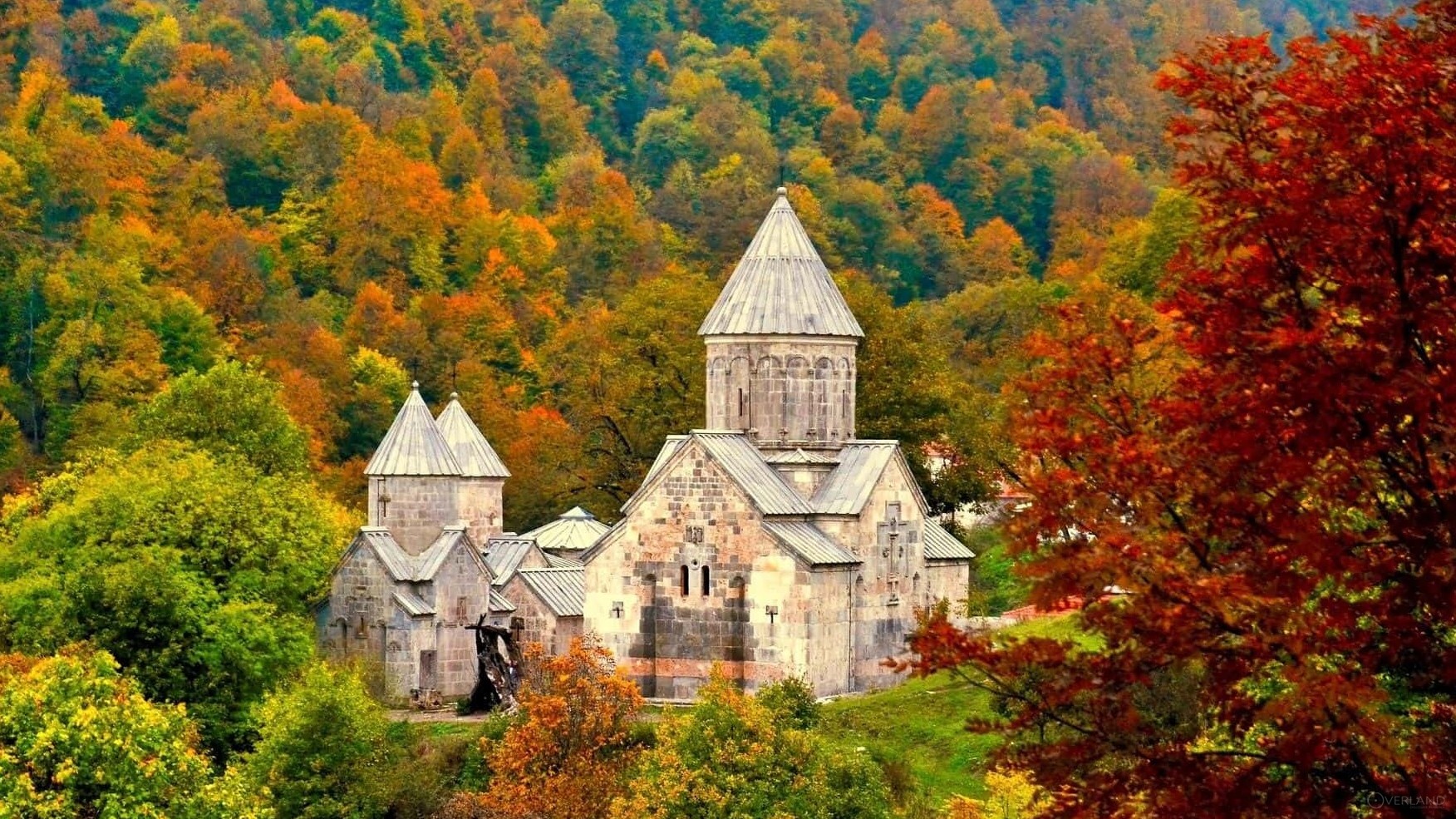
Older view of Haghartsin Monastery nestled in forested mountains Haghartsin Monastery today, surrounded by the woods of Dilijan Courtyard and stone buildings of Haghartsin Monastery in the forest

Haghartsin Monastery

📍 Teghut 3902, Tavush Province 🗺️ Open in Maps

A forest monastery in the hills of Dilijan

Haghartsin Monastery lies deep in the forests of Dilijan National Park, in a small valley where the surrounding slopes are densely covered with trees. Most of the complex was built in the 12th–13th centuries and is linked to local princes and important clerics of the Tavush region.

The complex includes several churches—Surb Grigor, Surb Stepanos and Surb Astvatsatsin—together with a gavit, refectory, monks’ cells and service buildings that form a small monastic “village” in the woods.

Pilgrimage site and place to relax

Today Haghartsin is both a place of worship and one of the most popular stops around Dilijan; in the courtyard you will often see pilgrims and travelers resting under the trees or wandering among the khachkars.

The combination of dense forest, cool air and dark stone buildings gives Haghartsin a very tranquil, almost secluded atmosphere, quite different from the open landscapes of the Ararat plain.

Architecture and restoration

The churches follow the classical Armenian cross‑domed type but with relatively simple exteriors that focus attention on the stone, the proportions and the surrounding nature rather than on heavy decoration. In recent decades Haghartsin has undergone significant restoration and is now much easier to access than it used to be.

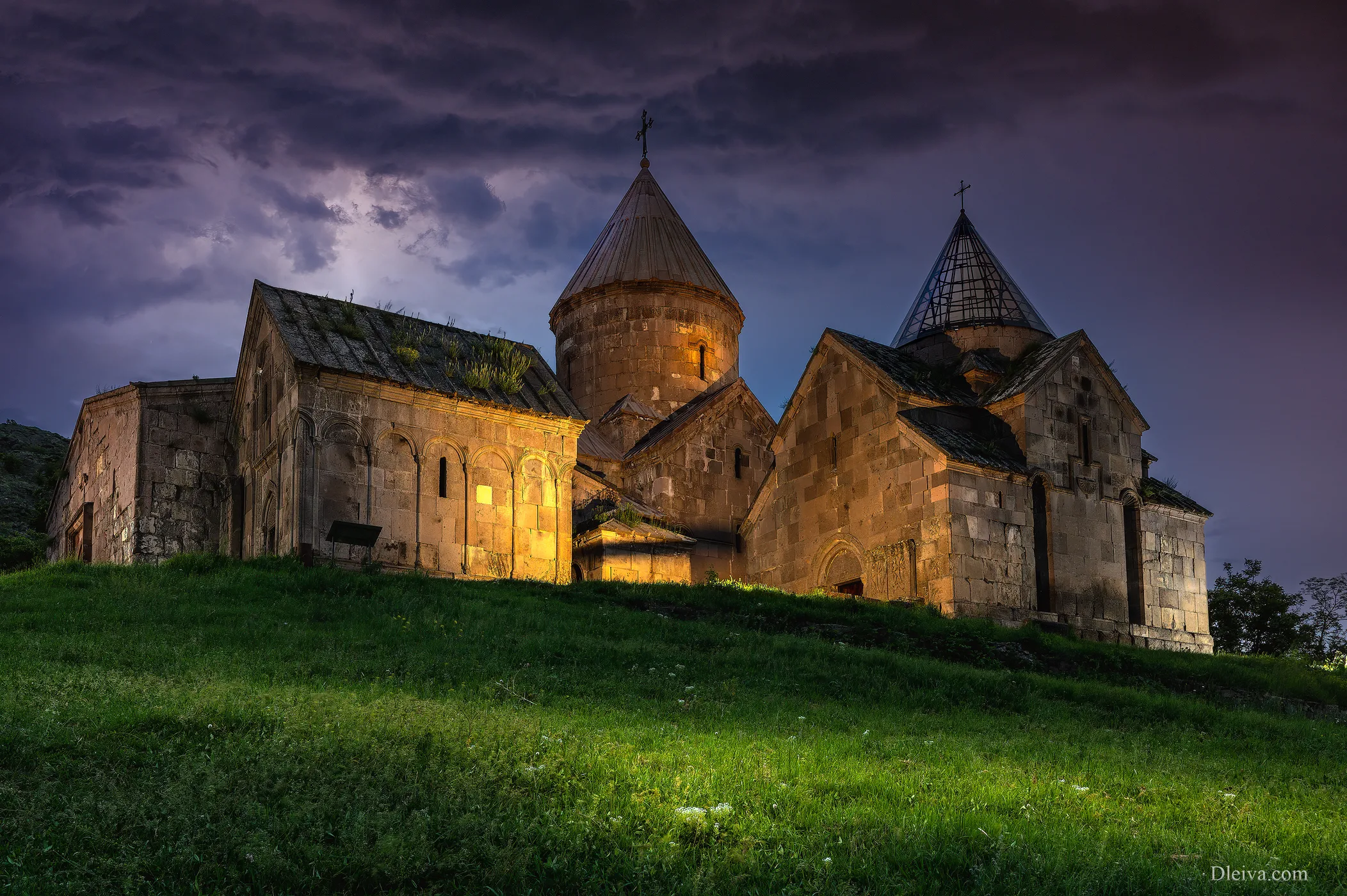
Older view of Goshavank Monastery with its stone churches Goshavank Monastery today above the village of Gosh and green hills Courtyard of Goshavank with khachkars and the statue of Mkhitar Gosh

Goshavank Monastery

📍 Gosh 3907, Tavush Province 🗺️ Open in Maps

Mkhitar Gosh’s monastery and a cradle of medieval law

Goshavank stands above the village of Gosh in Tavush province, in a forested area east of Dilijan. It was built in the 12th–13th centuries on the site of the older Getik Monastery, which had been destroyed by an earthquake.

The complex is closely associated with Mkhitar Gosh, the medieval scholar and jurist whose famous Lawcode was compiled here, making Goshavank an important center of Armenian legal and theological thought. A statue of Mkhitar Gosh stands in the monastery courtyard.

Churches, gavit and khachkars

The main buildings include the large Surb Astvatsatsin church, the smaller Surb Grigor church, a gavit, former school buildings and various service and residential structures.

One of Armenia’s most famous khachkars, known for its incredibly fine carving, stands at Goshavank and is often cited as a masterpiece of Armenian stonework.

Gosh Lake and the landscape

Many visitors combine Goshavank with a short hike to nearby Gosh Lake, using forest paths that link the monastery and the lake. This makes Goshavank both a cultural and a nature stop on trips around Dilijan and Tavush.

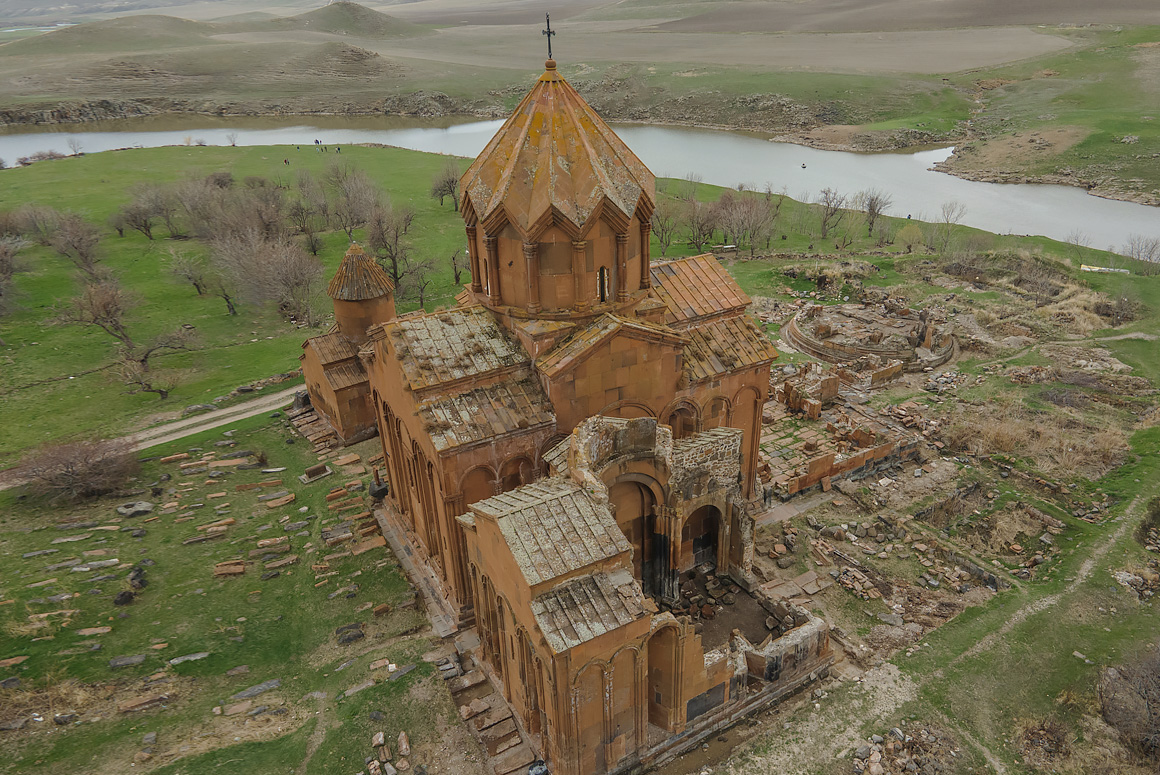
Main church of Marmashen Monastery on the plateau above Akhurian River gorge Church complex of Marmashen Monastery with reddish tuff structures Marmashen Monastery against the backdrop of river gorge and trees

Marmashen Monastery

📍 Marmashen, Shirak Province 🗺️ Open in Maps

Red tuff monastery on the Akhurian shore

The medieval monastic complex of Marmashen is located just outside Marmashen village, on the edge of the Akhurian River gorge, about ten kilometers northwest of Gyumri. The monastery was primarily built in the 10th-11th centuries and is associated with the name of Prince Vahram Pahlavuni.

The heart of the complex is the Katholike church, beside which stand several more churches and the ruins of a gavit, all made of reddish tuff, with characteristic arcades and blind niches of the "Ani school."

Unexpected plateau above the river

Marmashen stands on a plateau slightly elevated above the river level, so the churches seem to gaze toward the windings of the Akhurian. The area is not enclosed or silent, but somewhat isolated from the main road, and the monastery opens up to your eyes almost suddenly when you emerge above the gorge.

In spring and summer, the monastery is surrounded by greenery and fruit trees, which softens the appearance of the red tuff and stone facades even more.

Medieval atmosphere of tranquility

Marmashen was not only a spiritual center but also a mausoleum for the princely dynasty, and beneath the floor of the gavit, the tomb of Vahram Pahlavuni is still commemorated today.

During a visit here, you often hear only the sound of the river, the wind, and occasionally the voices of a small group of visitors, so the monastery is very suitable for a peaceful walk or sitting and being silent.

Saint Shoghakat Church in an old photograph on the plain near Vagharshapat Saint Shoghakat Church today with its stone dome and simple exterior General view of Saint Shoghakat Church and its courtyard in Vagharshapat

Saint Shoghakat Church

📍 Vagharshapat 🗺️ Open in Maps

A drop of light on the edge of Vagharshapat

Saint Shoghakat Church stands in Vagharshapat, forming part of the wider spiritual landscape together with the Mother Cathedral, Saint Hripsime and Saint Gayane. Built of reddish and dark tuff on the open plain, it is easy to spot from afar thanks to its compact but powerful domed silhouette.

The name “Shoghakat” can be understood as “a ray that has dropped” or “a drop of light” and is linked to the tradition that a beam of light once descended here upon a group of Christian virgins martyred for their faith.

Tradition and place of remembrance

According to this tradition, the church marks the place connected with the martyrdom of these virgins, whose story is closely tied to that of Hripsime and Gayane. The idea of a heavenly light falling on them gave the site its name and turned it into a place of pilgrimage.

Inside, the dim space and narrow beams of light entering through small windows reinforce this story and create a quiet, reflective atmosphere for visitors.

Architecture and setting

Shoghakat is a relatively small, cross‑domed church with a simple gavit‑like entrance and very restrained exterior decoration. The focus is on the overall mass, the dome and the church’s position in the open landscape rather than on elaborate carvings.

Together with the cathedral and other historic churches of Etchmiadzin, Saint Shoghakat is part of a UNESCO World Heritage Site and is often included in the same day’s visit as the Mother See, Saint Hripsime and Saint Gayane.

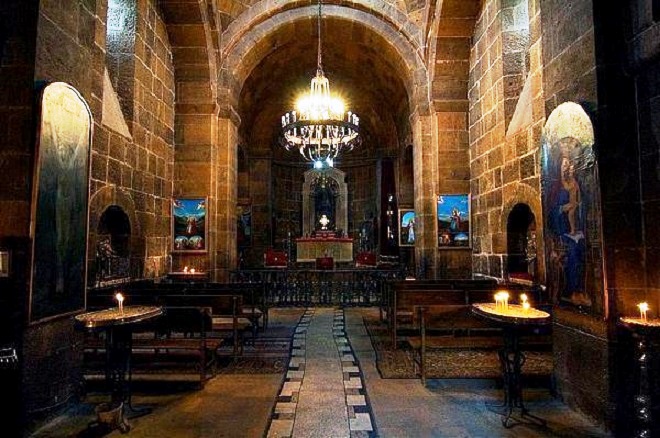
Older view of Aruchavank Cathedral standing on the open plain Interior of Aruchavank with high arches and stone walls

Aruchavank

📍 Aruch 0210, Aragatsotn Province 🗺️ Open in Maps

A monumental basilica on the plain

Aruchavank stands near the village of Aruch in Aragatsotn province, on a wide plain where its massive basilica silhouette dominates the horizon. The church, dedicated to Saint Gregory, is one of the finest examples of large Armenian basilicas.

The site is associated with the Mamikonian princely family, who chose Aruch as one of their main residences and turned it into both a political and spiritual center.

Architecture and interior space

Aruchavank is a long, barrel‑vaulted basilica with a wide central nave, high arches and powerful stone walls that create a deep, echoing interior. Inside you can still see traces of the collapsed dome, heavy piers and older construction layers in the masonry.

The sheer size of the building and its isolated position on the plain give it the feel of a stone fortress rising out of the landscape.

Partly ruined, still alive

Although parts of the cathedral are ruined, Aruchavank is still used occasionally for services and remains open as a historic monument for visitors.

The wind across the plain, the grey stone of the walls and the distant view toward Mount Aragats together create a very minimalist but powerful atmosphere around the church.

Older view of Saghmosavank Monastery on the edge of the Kasagh Gorge Saghmosavank Monastery today with views over the deep Kasagh Gorge and Mount Aragats

Saghmosavank Monastery

📍 Saghmosavan 0211, Aragatsotn Province 🗺️ Open in Maps

A clifftop monastery above the Kasagh Gorge

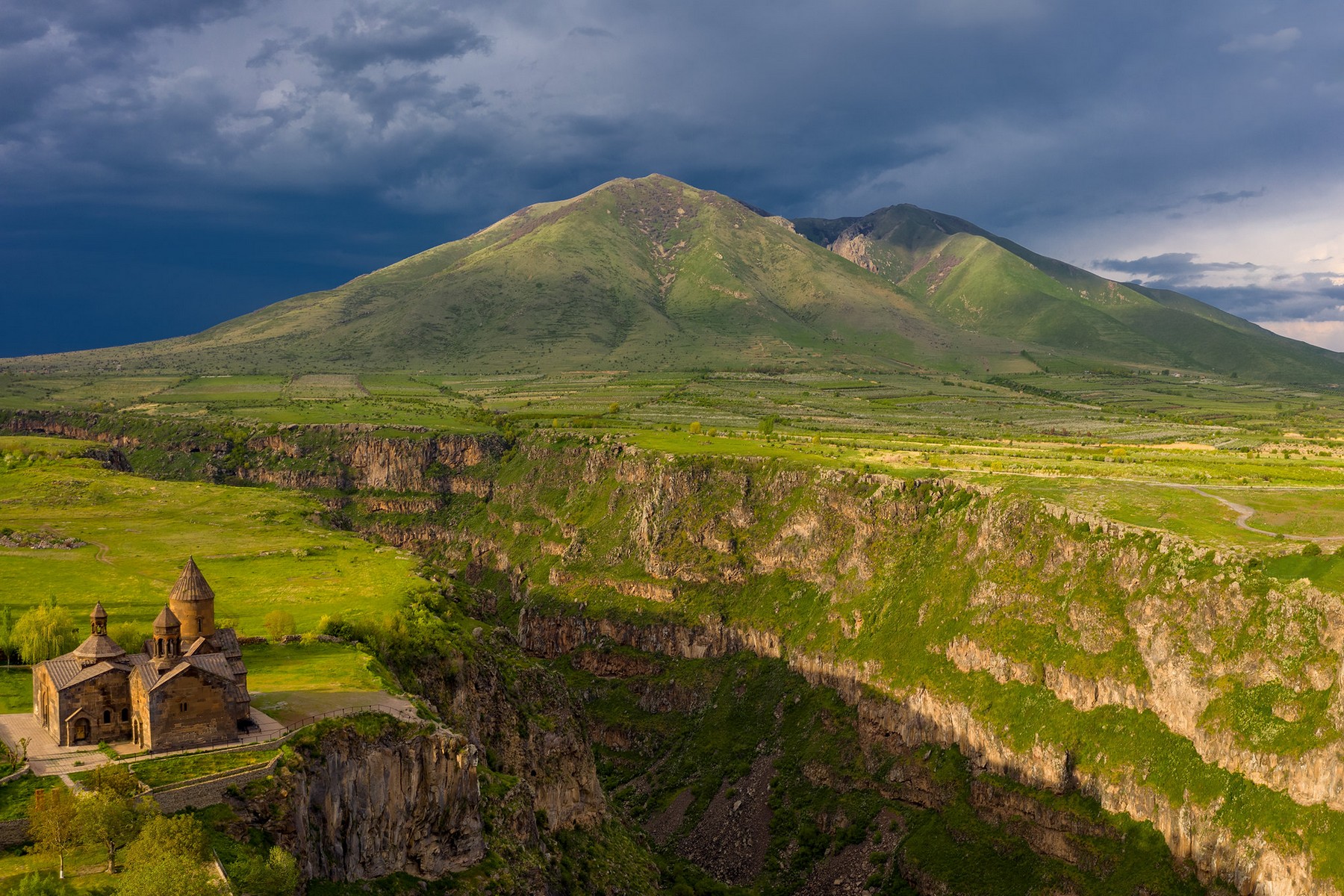
Saghmosavank stands on a dramatic clifftop in Aragatsotn province, right on the edge of the deep Kasagh River Gorge. On clear days the courtyard opens onto a panorama of the gorge below and Mount Aragats in the distance.

The monastery took shape in the medieval period under local princes and church leaders, who built the main church, gavit and a scriptorium here.

Church, gavit and scriptorium

At the heart of the complex is the church of Surb Sion, a cross‑domed building with an attached gavit, and a separate scriptorium where manuscripts were once copied and stored.

Around them are khachkars, a stone‑paved courtyard and smaller structures that together give the impression of a small monastic village hanging above the canyon.

Atmosphere of the gorge

One of the most striking experiences at Saghmosavank is simply walking to the edge of the cliff and looking straight down into the Kasagh Gorge, where the river disappears between rock walls.

Many visitors combine Saghmosavank with nearby Hovhannavank, either by road or via a hiking trail along the gorge, which makes for a full day of landscapes and monasteries in the same area.

Wide view of Hovhannavank Monastery standing on the edge of the Kasagh Gorge Older photograph of Hovhannavank showing the church and gavit up close Hovhannavank Monastery’s architecture today with the deep Kasagh Gorge behind it

Hovhannavank Monastery

📍 Ohanavan 0225, Aragatsotn Province 🗺️ Open in Maps

A monastery between village and gorge

Hovhannavank is a medieval monastic complex in the village of Ohanavan, set right on the edge of the deep Kasagh River Gorge. It is dedicated to John the Baptist (Surb Karapet), and the mix of older and later buildings is clearly visible in its architecture.

The oldest layer is the single‑nave basilica, traditionally linked to Gregory the Illuminator, while next to it stands the 13th‑century main church and the large gavit.

Surb Karapet and the gavit

The main church of Surb Karapet (Katoghike) is a cross‑domed structure sponsored by Prince Vache Vachutyan, notable for its rich stone carving and commanding position above the gorge.

Attached to it, the gavit is a spacious four‑pier hall with a central rotunda that lets in light from above and gives the interior a slightly theatrical feel, like an inner courtyard brought indoors.

Edge‑of‑the‑gorge atmosphere

The view from Hovhannavank is more enclosed than at Saghmosavank: the walls, enclosure and village houses press close around the complex, so the drop into the gorge feels sudden and dramatic.

Many visitors start or end the hiking trail from Saghmosavank here, as the two monasteries face each other across the Kasagh Gorge and together create a full day of both history and landscapes.

The domed basilica of Odzun on a plateau above the Debed Canyon Older view of Odzun Church with its courtyard and arcades Horomayr Monastery clinging to the cliffs of the Debed Gorge

Odzun Basilica and Horomayr Monastery

📍 Odzun 1731, Lori Province 🗺️ Open in Maps

A village basilica and a cliffside monastery

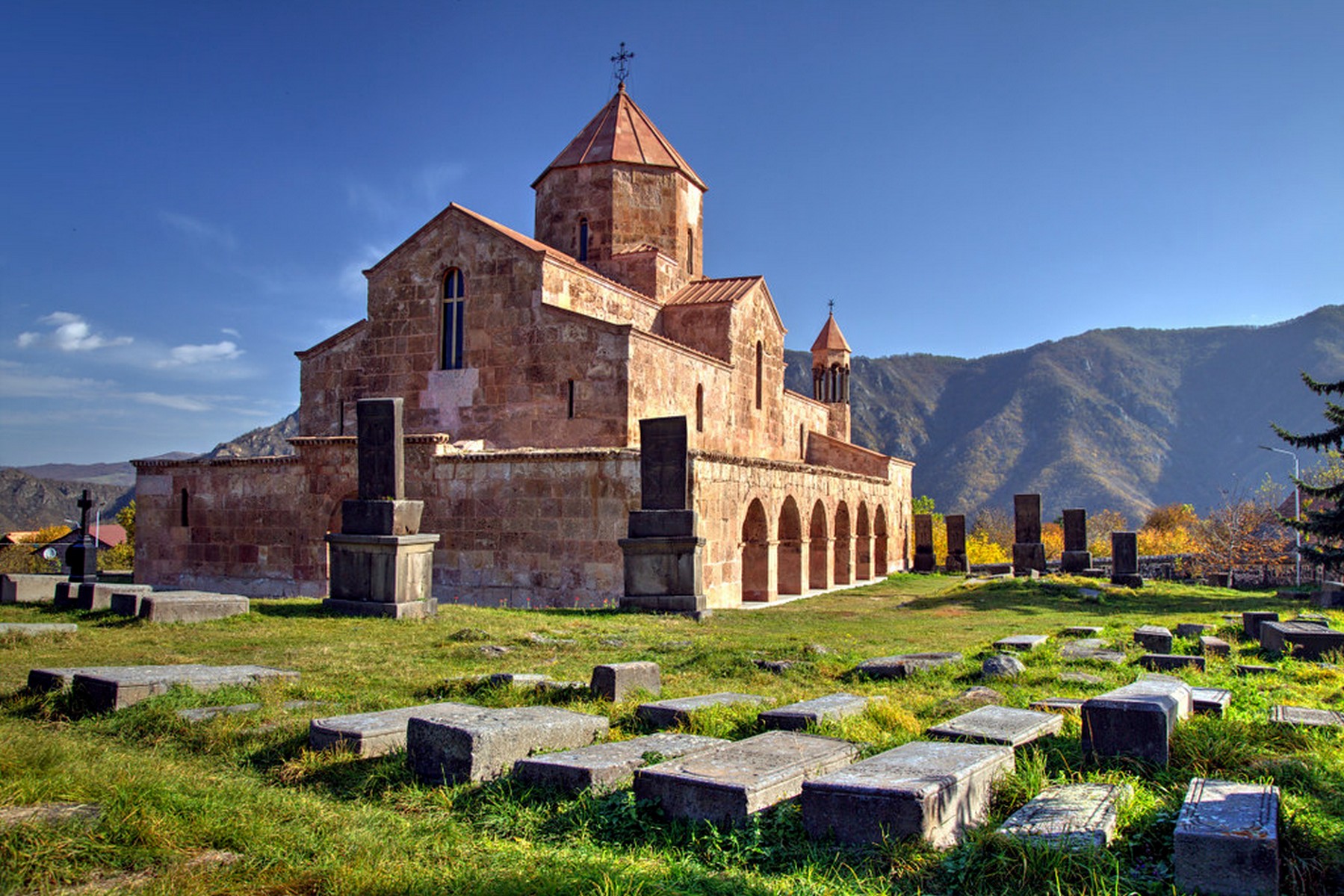
The domed basilica of Odzun stands on a wide plateau above the Debed Canyon and is one of Armenia’s important early Christian basilicas. Built between the 5th and 7th centuries, it is distinguished by its external arcaded galleries and long, clean lines that are especially striking from the south and west.

The church is surrounded by a spacious green courtyard with khachkars and ancient funerary monuments, and it still serves as an active place of worship for the surrounding villages.

Courtyard and canyon views

From the edge of the plateau, the land drops abruptly into the Debed Canyon, creating a powerful contrast between the calm village setting above and the rugged gorge below.

From here a footpath descends towards Horomayr Monastery, turning a church visit into a short hike along the canyon slope.

Upper and lower Horomayr

Horomayr is a medieval monastic complex split into two parts: an upper section reachable from Odzun, and a lower section built directly into the cliffs just above the river.

Its chapels, rock‑hewn rooms and carved khachkars give the impression that the monastery has grown out of the rock and is now hanging on the canyon wall.

Hiking in the Debed Canyon

One of the region’s classic hikes is the Kobayr–Horomayr–Odzun trail, an 8–11 km route along the left side of the canyon with constant viewpoints over the river and cliffs.

For a shorter option, the 1.5 km descent from Odzun to Horomayr is enough to feel both the depth of the Debed and the dramatic position of the monastery on the cliff.

Gndevank Monastery with its main church standing in the gorge Closer view of Gndevank’s courtyard and stone church Gndevank Monastery and the deep Arpa River Gorge around it

Gndevank Monastery

📍 Gndevaz 3704, Vayots Dzor Province 🗺️ Open in Maps

A solitary monastery deep in a canyon

Gndevank is a 10th‑century monastery in Vayots Dzor, tucked into the depths of the Arpa River Gorge, away from the main road. Tradition links its foundation to Princess Sophia, and the complex retains the feel of a compact fortified retreat.

The main church rises from a small walled courtyard, with the canyon walls and slopes pressing in close on all sides, making the monastery feel self‑contained and protected by the surrounding landscape.

Atmosphere of the Arpa Gorge

Down here the river is close, the cliffs tower above, and the monastery seems to hold on to a ledge between rock and water.

Old tracks and footpaths around the gorge let visitors turn a simple visit into a short hike, seeing Gndevank from different levels on the canyon walls.

A hidden yet reachable place

Gndevank is often described as a “hidden monastery at the end of a gorge hike”, but in practice it is still quite reachable from the Jermuk and Yeghegnadzor side roads.

For anyone looking for a quieter, more secluded monastic atmosphere, away from big crossroads and tour buses, Gndevank gives that feeling almost immediately as you descend towards the river and stone walls.

Modern churches

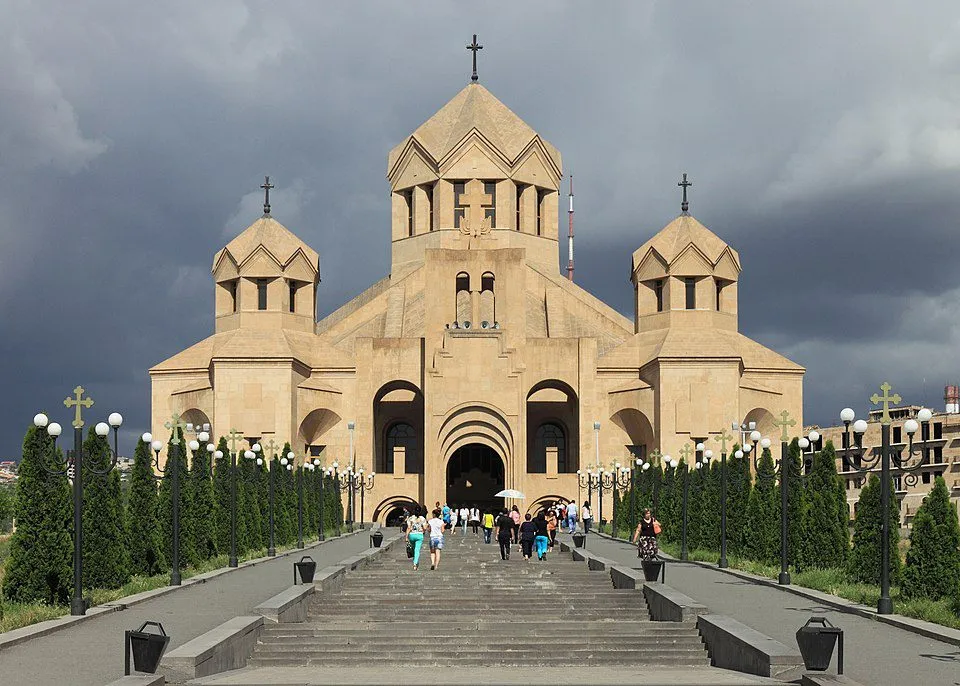
Saint Gregory the Illuminator Cathedral in Yerevan Interior of Saint Gregory the Illuminator Cathedral in Yerevan
Saint Gregory the Illuminator Cathedral

📍 Yervand Kochar St, Yerevan 🗺️ Open in Maps

A modern symbol for 1700 years of Christianity

Rising on a small hill in Yerevan, Saint Gregory the Illuminator Cathedral is the largest Armenian Apostolic church in the world and the spiritual “new heart” of the capital. It was built between 1997 and 2001 and consecrated in 2001 on the occasion of the 1700th anniversary of Christianity as Armenia’s state religion.

The complex includes the main cathedral with around 1700 seats and two smaller chapels dedicated to King Tiridates III and Queen Ashkhen. Relics of Saint Gregory the Illuminator were brought here from Naples and placed in a special reliquary, and shortly after the consecration the cathedral was visited by Pope John Paul II.

Architecturally, the building combines traditional Armenian forms with clean, modern lines, creating a wide, light‑filled interior that feels both monumental and calm. Standing in the open courtyard under the 54‑meter bell tower, you see the whole of Yerevan spread out below and, on clear days, Mount Ararat on the horizon.

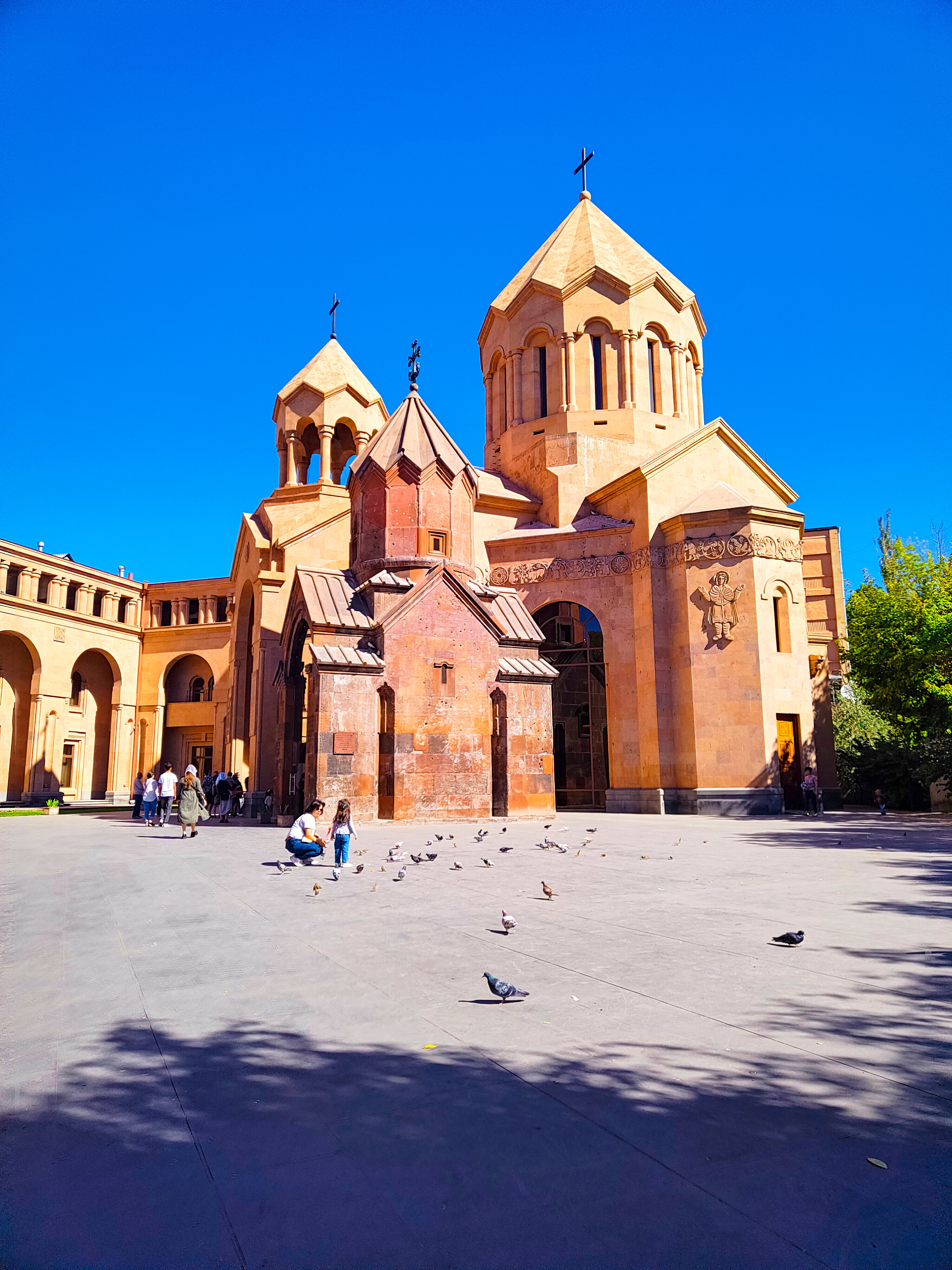
Saint Anna Church and old Katoghike in central Yerevan Courtyard and main facade of Saint Anna Church in Yerevan

Saint Anna Church

📍 Abovyan St, Yerevan 🗺️ Open in Maps

A quiet courtyard in the heart of Yerevan

Saint Anna Church sits right in the center of Yerevan on Abovyan Street, yet as soon as you pass through the gate the city noise stays outside and a calm stone courtyard opens up. The church was built between 2011 and 2014 and consecrated in 2015 as part of a single complex together with the tiny 13th‑century Katoghike Church just a few meters away.

Its architecture combines a classic Armenian cruciform plan and dome with clean contemporary lines and warm pink tuff stone, so it feels both traditional and perfectly at home in today’s city. On one side of the courtyard rises the Catholicosate residence, which adds a sense of importance, but the atmosphere remains intimate and welcoming.

Saint Anna is especially atmospheric at dusk, when the facades and the passages around Katoghike are softly lit and the city’s noise turns into a distant background. It is the kind of place where you may enter “just to have a look” and end up sitting on a bench for half an hour, watching people pass through the courtyard and feeling old and new Yerevan merge in one frame.

Saint Thaddeus Church in Masis with contemporary Armenian architecture General view of Saint Thaddeus Church with courtyard and surrounding area Interior of Saint Thaddeus Church with dome and sacred images

Saint Thaddeus Church

📍 2nd Street, Masis 0801, Ararat Province 🗺️ Open in Maps

Contemporary cathedral consecrated in 2015 – heart of Masyatsotni Diocese

Saint Thaddeus Church is located in the center of Masis city and has served as the diocesan cathedral of Masyatsotni since 2021. The construction site was chosen by Vazgen I, Catholicos of All Armenians, in 1991, and the ground blessing ceremony was conducted the same year.

Construction began in 2003 through the initiative and funding of benefactor Hrant Vardanyan, and in 2015 the church was completed by his sons, Mikayel and Karen Vardanyan. On October 4, 2015, the church was consecrated by Karekin II, Catholicos of All Armenians.

Architecture rich with symbolism

The church was designed by architects Arthur and Anahit Tarkhanyan, combining traditional Armenian church-building practices with contemporary construction solutions. The cathedral has three levels and is distinguished by its unique composition and spatial solutions.

The interior space is formed by two intersecting squares, symbolizing eternity and purity of faith. The dome rests on semi-crossing arches, and the facing has a unique color scheme – colors become lighter from center to edges, and darker from foundation to dome.

33 meters – symbolic height

The cathedral's height, excluding the dome's cross, is 33 meters, symbolizing the years of Jesus Christ's earthly life. Along the entire length of the wall surrounding the church, 33 biblical commandments are engraved, creating a unique unity of spiritual and architectural symbolism.

Memorial sites and candle lighting

Near the church entrance is the candle lighting hall, where 12 sacred images were installed in 2025. In the church courtyard stands a memorial fountain dedicated to Hrant Vardanyan's memory, and on April 24, 2016, a khachkar was placed honoring the 1.5 million martyrs of the Armenian Genocide. The khachkar is carved from a single piece of tuff stone.

Saint Thaddeus Church today is not only the spiritual center of Masis city but of the entire Masyatsotni Diocese, where liturgies, events, and pilgrimages are held – especially on the feast day of Saints Thaddeus and Bartholomew the Apostles.