
Artashat Octagonal Church
Location and discovery
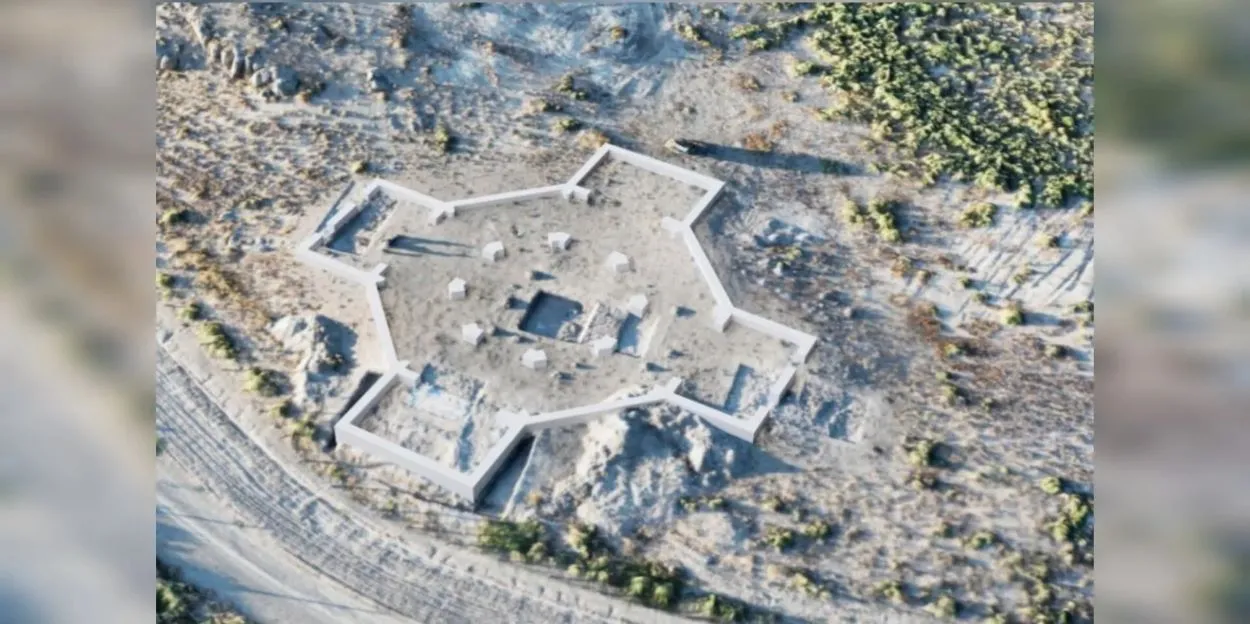
The remains of the octagonal church were discovered in the area of ancient Artashat, known as Artaxata, which in the Hellenistic period and the early Christian centuries was one of the capitals of Armenia. The church was situated on a hillside and occupies an area of about 1,000 m².
Dating and significance
Radiocarbon analysis of the wooden remains of the structure has shown that the church was built in the first half of the 4th century, which makes it one of the earliest archaeologically documented churches in Armenia.
The octagonal floor plan with cruciform extensions is characteristic of early Christian monuments built as memorials or in honor of a sacred place, which is why it is assumed that this could have been the burial site of a martyred saint.
Architectural features
The octagonal part of the church has a diameter of about 30 m, is built of local stone and lime mortar, and has a simple mortar floor and terracotta tiles inside.
Trace of early Christianity in Armenia
The octagonal church of Artashat is important evidence that Christian worship had already firmly taken root in one of Armenia’s capitals by the early 4th century and links Armenia to the church traditions of the Eastern Mediterranean.