
Noravank Monastery
Deep inside a gorge of red cliffs
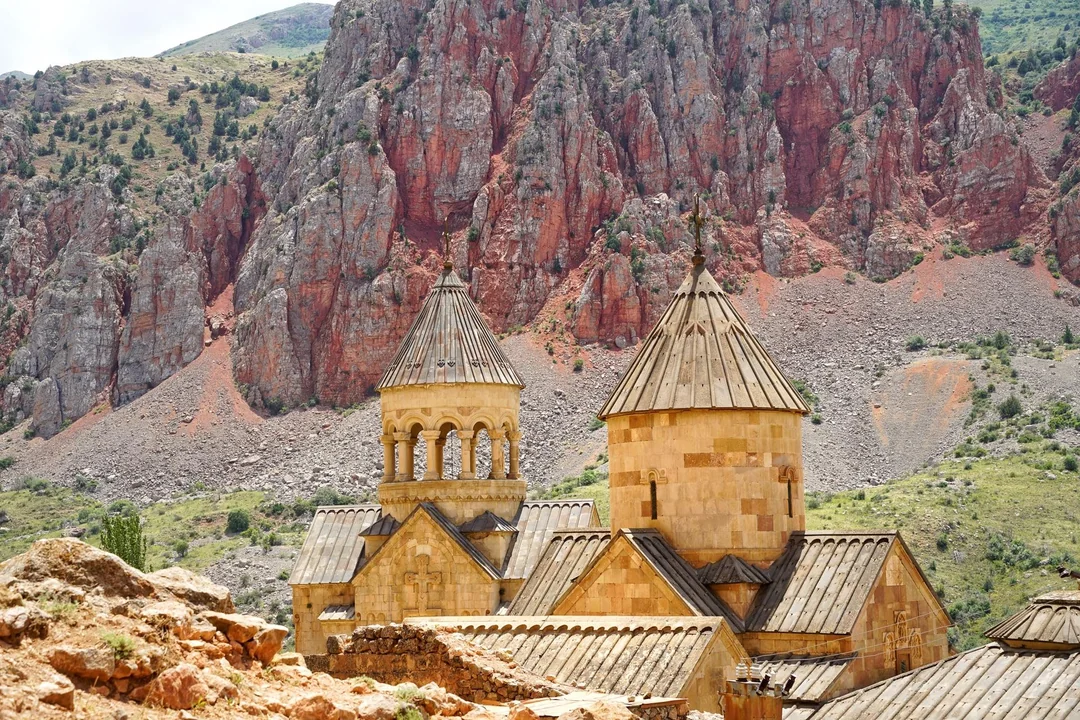
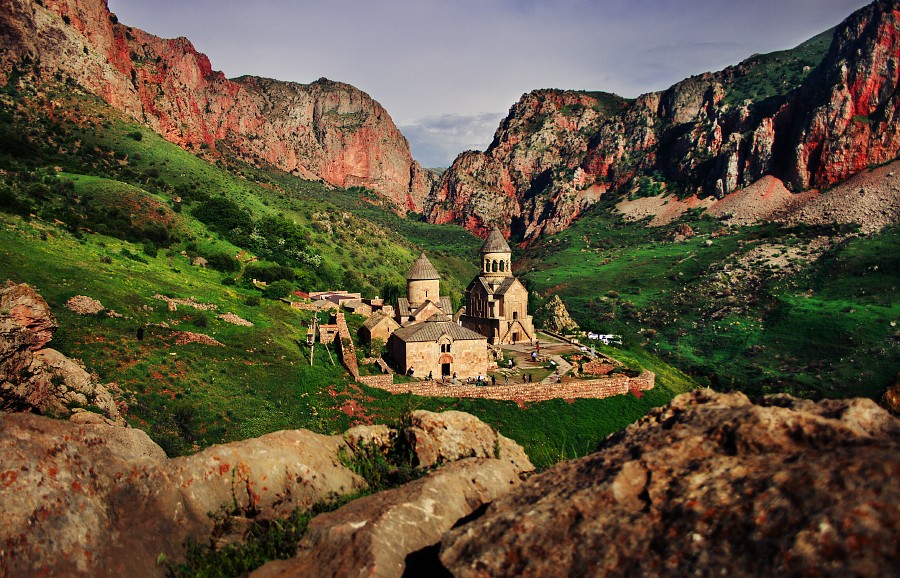
Noravank is hidden deep in the Amaghu gorge, between high, red rock walls, so that at first glance the monastery seems to be “attached” to the cliff. When you drive into the gorge, the road suddenly narrows, and at the end, on a small plateau, the monastic complex appears.
The historical core of the monastery dates to the 13th century. At that time, the main church of Saint Karapet was built, along with the two‑storey Church of the Holy Mother of God with its narrow staircase, and a number of halls and chapels connected with the activity of the Orbelian princes.
The Orbelian mausoleum and the two‑storey church
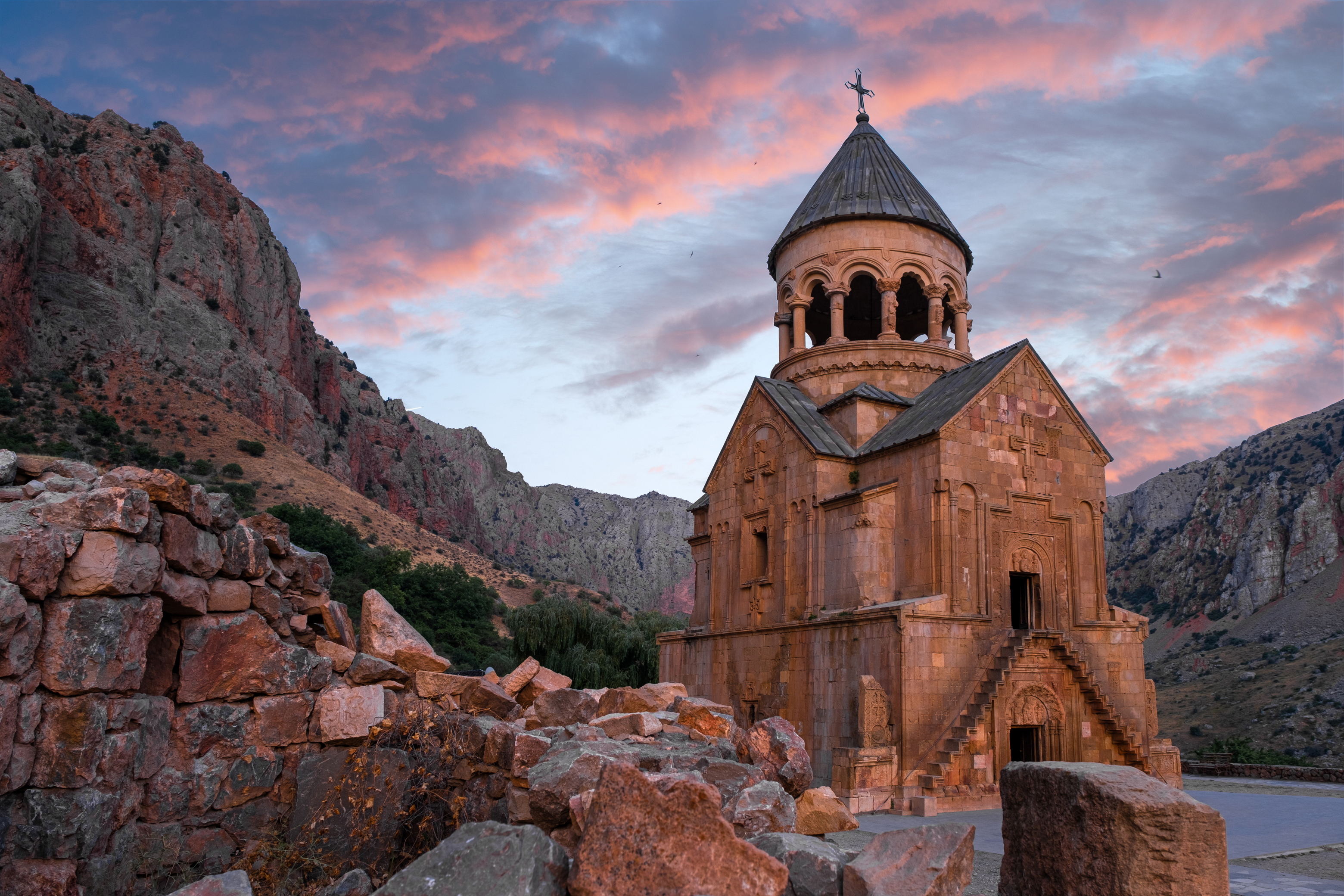
The small Church of the Holy Mother of God, whose lower level is a mausoleum and upper level a small prayer hall, is one of the most memorable structures of Noravank. The narrow, open staircase leading to the upper floor is, on the one hand, a favorite shot for photographs, but it also reflects the “play” between form and symbolism in medieval Armenian architecture.
The Orbelian tombstones, khachkars, and wall inscriptions tell how this monastery functioned not only as a spiritual center, but also as an important political hub in the south.
Architectural setting
Noravank is almost completely surrounded by cliffs, so the light and colors here always feel a bit theatrical. In the early morning, Noravank is darker and more peaceful, while at sunset the red rocks begin to glow and the whole complex turns golden.
Today
Today Noravank is one of the most frequently visited monasteries in Armenia. It is usually included in Garni–Geghard or southern tour itineraries and is an excellent stop on the way to Syunik or Artsakh.